
Clinical Research Case Management System for a District General Hospital's Gastroenterology Department
This month, the multi-disease database management system we developed for a district general hospital officially entered trial operation. Focused on digital clinical research, the system brings tangible change to the work of physicians, departments, and clinical research centers.
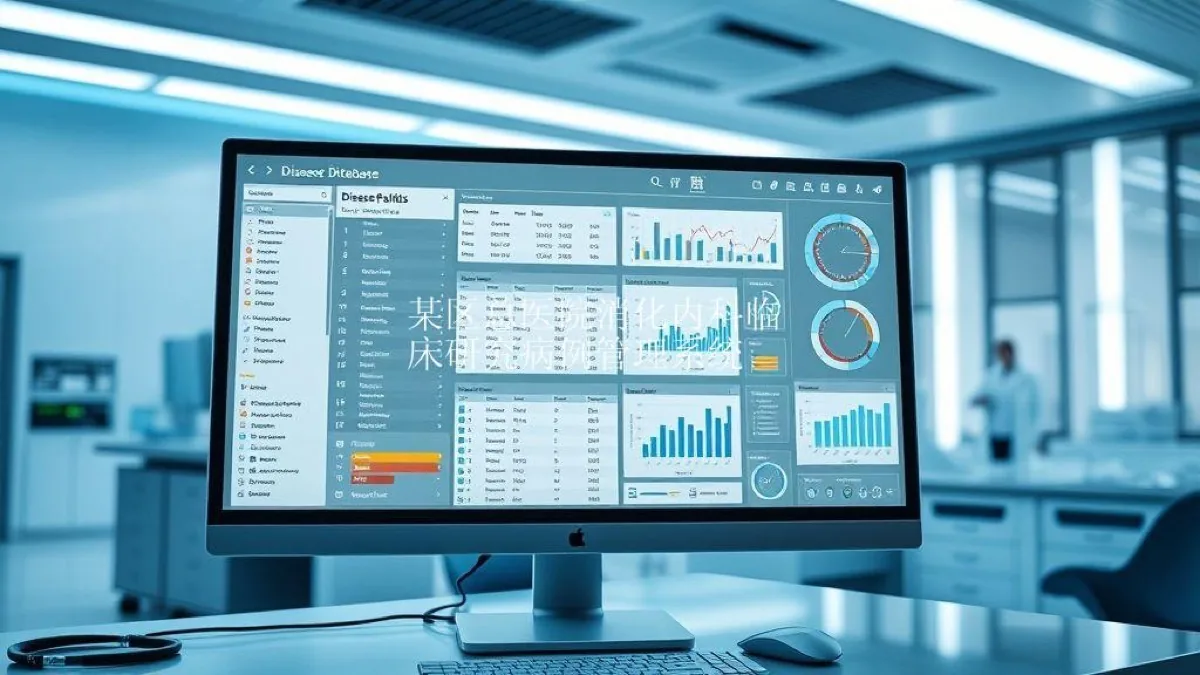
This month, the multi-disease database management system we developed for a district general hospital officially entered trial operation. Focused on digital intelligence solutions for the clinical research field, the system will bring tangible changes to the working patterns of physicians, departments and clinical research centers.
At the foundational level, the system efficiently handles core tasks such as disease management and patient cohort management. Through systematic processing, it can precisely track diagnosis and treatment data across disease types, and standardize the organization of patients' basic information and disease progression — effectively replacing the tedious process of manual spreadsheet checking.
The system's core strength lies in its data processing capability. Its multi-dimensional statistical analysis module can quickly extract key information from massive clinical data — such as disease incidence trends and treatment outcome comparisons — and present it in intuitive charts. This will dramatically reduce the time physicians spend on manual calculation and report preparation, providing precise support for research topic selection and study design.
For the personalized needs of clinical research, the system includes a custom form design function. Researchers can build data collection forms to fit their projects, flexibly adjusting fields and formats so that data gathering closely matches actual research needs, breaking through the limits of fixed templates.
The Lingser clinical research case management system integrates the full workflow of data collection, governance and analysis into an intelligent processing chain. Its value lies not only in improving the efficiency of physicians and research teams, but also in deeply mining the value of clinical data, giving discipline development a clear direction, and accelerating the translation of research results from laboratory to clinical application — ultimately benefiting patients.
The system is currently in trial operation, and we will continue to optimize and upgrade it based on actual usage feedback. We look forward to it becoming a reliable ally for clinical research, working with medical professionals to steadily advance medical research.