
Why Technology Service Companies Must Pivot to AI Agent Development
The global AI Agent market is set to reach $10.91 billion in 2026, with enterprise adoption exceeding 40%. This article examines why technology service companies must transform toward AI agent development, from three angles: market data, value migration, and implementation paths.
A Phase of Oversupply in Foundation Model Capabilities: Agents Become the Landing Ground for Value Migration
In 2026, a subtle change has appeared in the AI industry: the leaderboards of large language models are drawing less attention, while capital and enterprises are pouring real money into another direction—agents. The core logic is clear: the "general-purpose capabilities" of large language models are in a phase of oversupply, and the decisive question for AI is shifting from "can it chat" to "can it get things done."
Market data confirms this judgment. The latest statistics from Grand View Research show that the global AI agent market will reach US$10.91 billion in 2026, up 43% from US$7.63 billion in 2025; institutions expect it to reach US$182.97 billion by 2033, a seven-year compound growth rate of 49.6%. Growth in the domestic market is even steeper—IDC estimates that China's enterprise-grade AI agent market will reach about RMB 44.9 billion in 2026, nearly double the RMB 21.2 billion of 2025, a compound annual growth rate of 107%.
Even more noteworthy is the gap between adoption and real-world deployment. By mid-2026, 40.3% of enterprises were already using AI agents, but only 23% had achieved "scaled deployment" (embedded in core business flows and generating measurable ROI). Gartner's research shows that fewer than 5% of enterprise applications carried AI agents in 2025, and the figure is expected to jump to 40% by the end of 2026—one of the fastest adoption curves in the history of enterprise software. The 17-percentage-point gap in between is exactly the value space that technology service companies can step in and capture.
Why Technology Service Companies Must Pivot to AI Agent Development
For traditional technology service companies, agents are not an optional question of "whether to do it," but a compulsory one: "transform, or be eliminated." Three trends make the transformation urgent.
First, value is migrating from the model layer to the application layer and the middleware layer. With the inference cost of large models down to about US$0.002 per thousand tokens and fine-tuned small models delivering 10x to 100x cost compression, the room for differentiation that rests purely on model capabilities has become extremely limited. Data intelligence providers such as Mininglamp moved their strategic focus to Agentic AI back in 2025, and their agent business generated hundred-million-yuan-level revenue in its first year—a path that validates the viability of the business model of "delivering results instead of tools."
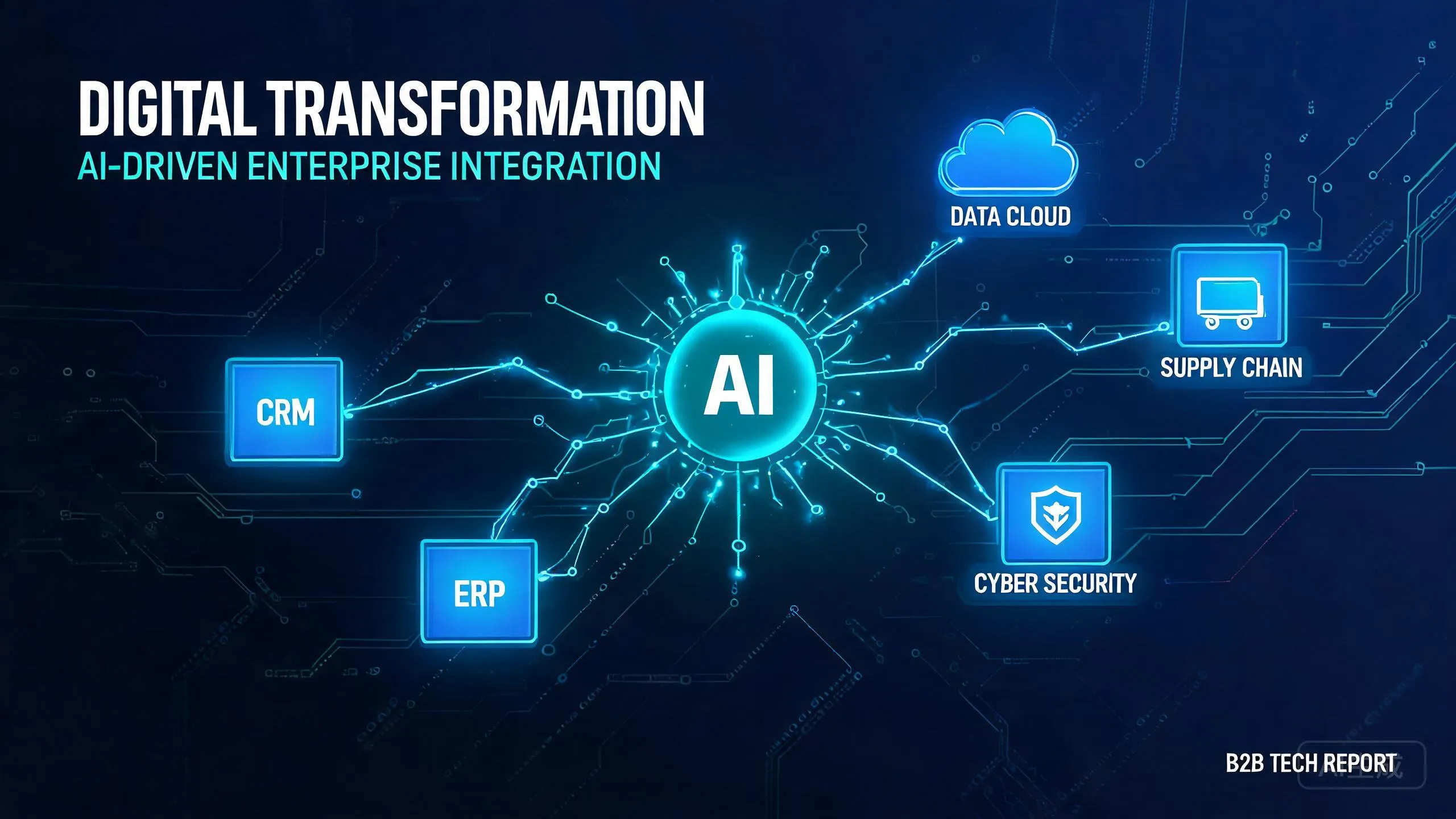
Second, the real bottleneck for enterprise adoption is system integration, not model capability. A large number of enterprises run legacy systems with no standard interfaces; for an agent to "get things done," the full chain of data extraction, order creation, and workflow approval has to be opened up. This is precisely where technology service companies hold the advantage—years of deep work inside enterprise systems, understanding of business processes, and the trust of existing customers are barriers that pure model vendors can hardly replicate quickly. Drilling agent capabilities "into" the enterprise's existing workflows, rather than making the enterprise bend around AI, is the key to landing.
Third, ROI has been proven at scale. McKinsey's 2025 survey of 2,000 enterprises shows that agents deliver an average return of US$3.5 for every US$1 invested, with ROI compounding year over year—41% in the first year, 87% in the second, and more than 124% in the third. Feishu Agent has lifted office efficiency by 40%, GitHub Copilot X has raised R&D efficiency by 37%, and leading manufacturers have seen inventory turnover efficiency improve by 18% after adoption. Quantifiable returns are pushing enterprises to accelerate from "pilot testing" into "scaled deployment."
The Transformation Path: Start from the Customer's Existing Systems, Small Entry Point, Deep Reach
Transformation does not mean abandoning the existing business and starting from scratch; it means grafting agent capabilities onto the soil of existing customers and current system capabilities.
Scenario selection is the first step. Give priority to scenarios with standardized processes, complete data, and clear returns—intelligent customer service and marketing, R&D assistance, and supply chain management are currently the most mature directions. Using "quantifiable value, customers willing to invest, replicable solutions" as the yardstick, cut into high-value scenarios through a small entry point, and build confidence in the transformation with quick wins.
On the technology stack, orchestration frameworks such as LangChain, LlamaIndex, and CrewAI have matured into production-grade tools, compressing the integration cycle of agents with enterprise systems from months to weeks. The open-source ecosystem is picking up speed—OpenAI has open-sourced Codex Harness, Alibaba has open-sourced Qwen-UI-Agent, and DeepSeek has open-sourced the core modules for tool calling. The infrastructure for agents is entering an "open-source co-building" stage, which means a lower entry barrier and controllable R&D costs for technology service companies.
On the pricing model, large and medium-sized enterprises prefer "customized service + private deployment" solutions, with contract values concentrated between RMB 1 million and RMB 5 million per year; small and medium-sized enterprises lean toward the "API call + pay-per-use" model. Technology service companies can price in tiers by customer size, polish their products through customization projects for existing customers, and then serve SMEs with standardized capabilities to achieve scale expansion.
The competition over agents is, in essence, no longer a technology show, but a question of "whether agents can blend into the enterprise's existing systems." Technology service companies stand closest to enterprises and understand business processes most deeply—and that is their most solid trump card for pivoting to AI agent development. Lingser Technology is exploring along this direction, combining years of accumulated industry-system experience with agent capabilities to deliver integrated solutions that run from scenario diagnosis to implementation.